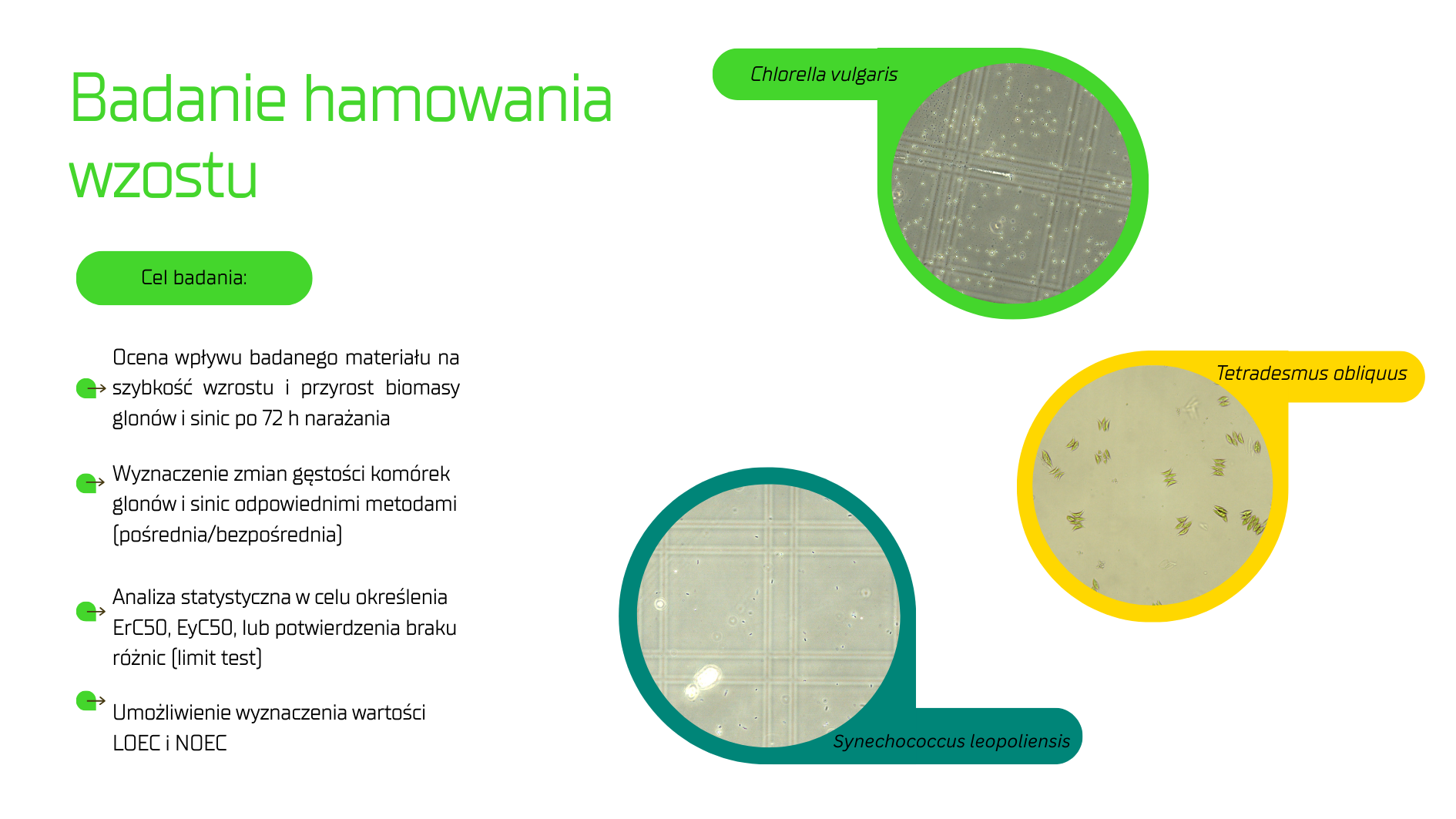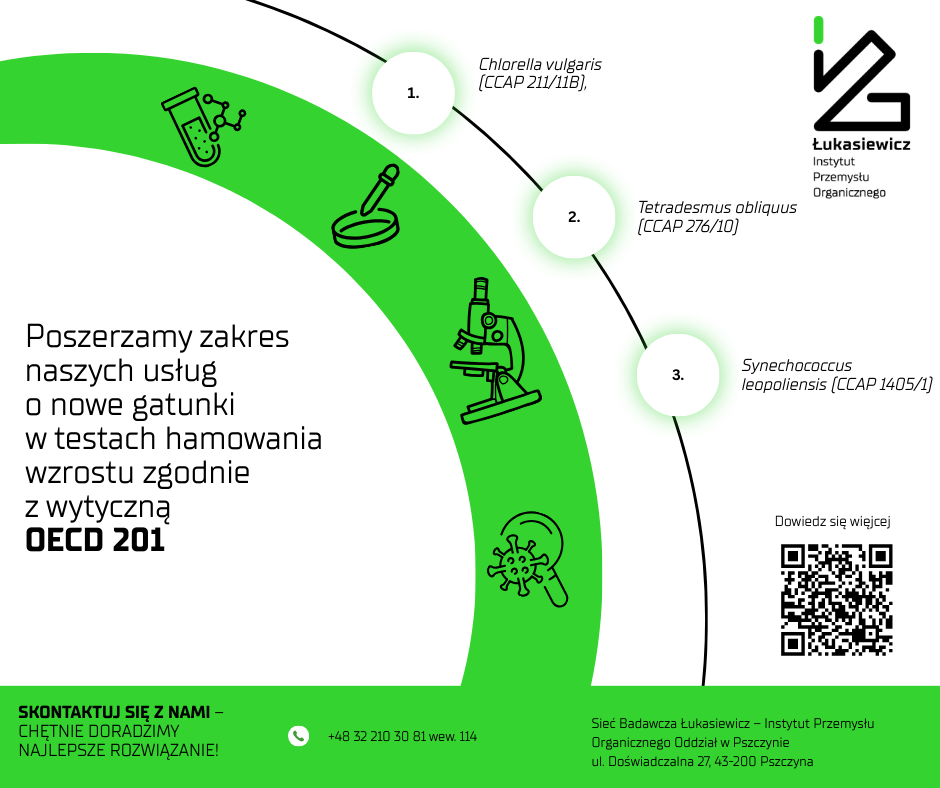
We are pleased to announce that we are expanding our range of services to include new 3 test species in growth inhibition studies in accordance with OECD guideline No. 201 (2006)/ EU method C.3:
- Chlorella vulgaris (CCAP 211/11B),
- Tetradesmus obliquus (CCAP 276/10),
- Synechococcus leopoliensis (CCAP 1405/1).
The aim of the study is to determine the effect of the test material on the growth rate and biomass increase of algae and cyanobacteria after 72 hours of exposure. The growth rate and biomass increase are determined based on the cell density of algae and cyanobacteria, which is measured for each replicate using an indirect method for the algae Tetradesmus obliquus and Chlorella vulgaris, and a direct method for the cyanobacteria Synechococcus leopoliensis.
The test results are statistically analyzed to establish the final endpoints: ErC50 based on growth rate, with a 95% confidence interval (if possible), EyC50 based on biomass increase, with a 95% confidence interval (if possible), or to demonstrate the absence of statistically significant differences in cell number increase between the tested material concentration and the control (limit test).
The study must be designed so that the results allow the determination of the LOEC (i.e., the lowest observed effect concentration) and NOEC (i.e., the no observed effect concentration).